
Wells Fargo's Q3 Earnings: A Masterclass in Corporate Beige
By Julian Vance
The ritual is always the same. A press release hits the wire, a Form 8-K is filed with the SEC, and a collection of analysts dial into a conference call, coffee in hand, ready to parse every syllable for a hint of alpha. Wells Fargo’s third-quarter 2025 earnings call on October 14th was no different in its execution, but it was exceptional in its effect: a profound and deafening quiet.
In an age of disruptive fintech and volatile market swings, Wells Fargo delivered a quarter so meticulously, so exquisitely average that it bordered on performance art. The Rhea-AI platform, which scrapes and quantifies market sentiment, rated the event’s impact as "Neutral." Not good, not bad. Just… present. A beige wall in a world of clashing colors.
This wasn't a miss. It wasn't a beat. It was a carefully calibrated exercise in institutional blandness. And this is the part of the report that I find genuinely puzzling: In finance, a lack of signal is often a signal in itself. The critical question isn't "How did Wells Fargo perform?" but rather, "Why was this performance so deliberately unremarkable?"
Deconstructing the Numbness
To understand the beige quarter, you have to look at the preceding weeks. The data points were there, but they were the financial equivalent of background noise. On September 17th, the bank lowered its prime rate to 7.25 percent, a move tethered to broader monetary policy, not a bold strategic stroke. A week earlier, on September 9th, it provided a $250 million debt facility to Aequum Capital—a significant number for Aequum, but a rounding error for a bank with approximately $2.1 trillion in assets. The company even presented at the Barclays conference, a standard check-the-box appearance on the corporate calendar.
These are not the actions of a company trying to make waves. They are the routine, predictable hum of a colossal machine. Think of Wells Fargo not as a nimble speedboat but as a massive container ship. It’s too big to turn on a dime, its course is set months in advance, and its primary function is not to dazzle but to simply move vast quantities of capital from Point A to Point B without incident. The recent scandals were the equivalent of a rogue wave nearly capsizing the vessel; now, the captain’s only directive is "calm seas and steady sailing."
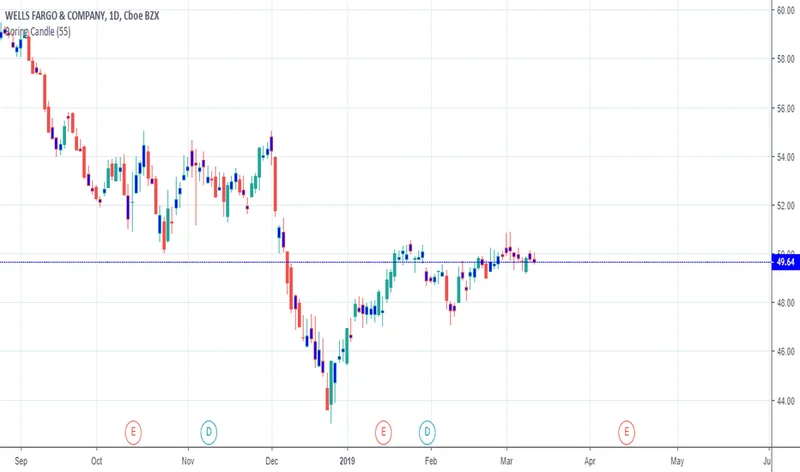
The problem with this strategy is that container ships don't discover new continents. They are incredibly efficient at traversing known routes, but they lack the dynamism required for exploration and high-growth discovery. Is this calculated quietness a sign of disciplined, mature management successfully navigating a post-scandal era? Or is it masking a fundamental lack of innovative engines to power future growth?
The Ownership Paradox
The most telling data isn't in the earnings report itself, but in the capital structure. Institutional ownership in Wells Fargo is immense. The big funds—pensions, mutuals, endowments—own nearly 80% of the company—to be more exact, 78.94%. This tells you that the so-called "smart money" views WFC as a utility. It’s a stable, dividend-paying anchor for a conservative portfolio, a bond proxy masquerading as an equity. They aren’t buying it for explosive growth; they’re buying it for predictability. They’re buying the beige.
But here is the discrepancy that should give any investor pause. Insider ownership stands at a minuscule 0.09%.
Let that number sink in. The senior executives and board members who steer this $248 billion vessel have, collectively, a statistically insignificant amount of their personal wealth tied to its success. This isn't illegal or even uncommon for a company of this scale (where compensation is often cash and performance-unit heavy), but it is deeply revealing. High institutional ownership paired with low insider ownership paints a picture of a caretaker management team, not a band of hungry entrepreneurs. It suggests a belief in stable operations, but perhaps not a conviction in outsized, market-beating returns.
When the people in the boardroom aren't making significant personal bets on their own stock, what does that signal to the market? Does it reflect a sober, realistic assessment of a mature company in a low-growth phase, or does it betray a lack of faith in the company's ability to innovate its way to a more dynamic future? The numbers don't provide a definitive answer, but they certainly frame the question.
The Signal in the Noise Floor
Let's be clear. Wells Fargo isn't in trouble. A company ranked No. 33 on Fortune’s list of America’s largest corporations isn't going anywhere. But the Wells Fargo Reports Third Quarter 2025 Financial Results confirm a strategic pivot that has been underway for years: the intentional retreat from the headlines. After a decade of regulatory penalties and public flagellation, "boring" is the new "bullish." The beige is a feature, not a bug. It’s a firewall against volatility and, more importantly, against scrutiny.
For the institutional funds that need a stable, dividend-yielding slot in their portfolio, this is perfectly acceptable. But for anyone else, the message from this quarter is unambiguous. The management team is telegraphing that their primary goal is no longer aggressive growth but institutional stability. They are managing the container ship, not building a rocket. The signal is the complete absence of a signal, and in today's market, that tells you everything you need to know.