Beyond the Pill: Why Novo Nordisk's $5.2 Billion Gambit for Akero is a Glimpse into Medicine's Next Frontier
When I saw the news flash across my screen on October 9th—Novo Nordisk to buy Akero Therapeutics for up to $5.2 billion - Yahoo Finance—my first thought wasn’t about the stock prices or the staggering $5.2 billion price tag. My mind went somewhere else entirely. This is the kind of breakthrough that reminds me why I got into this field in the first place. I saw a signal, a massive, flashing beacon indicating that we are finally turning a corner in how we think about medicine itself. This isn't just another pharma merger; it's a declaration that the era of simply managing chronic disease is ending, and the era of reversing it is beginning.
For decades, we’ve been stuck in a loop. We treat symptoms. We give you a pill for high blood pressure, another for cholesterol, and a third for blood sugar. We’re essentially patching leaks in a dam that’s under constant, overwhelming pressure. But what if we could reinforce the dam itself? What if we could actually undo the damage?
That’s the profound question at the heart of this deal. And the answer, tucked inside the labs of Akero Therapeutics, is a single, experimental drug: efruxifermin.
The Silent Epidemic Gets a Voice
Let’s talk about MASH. It sounds like something from a sci-fi movie, but it stands for metabolic dysfunction-associated steatohepatitis—in simpler terms, it's a severe, aggressive form of fatty liver disease. Imagine your liver, one of the most resilient organs in your body, being slowly and relentlessly assaulted by the consequences of our modern diet and lifestyle. It gets inflamed, scarred, and eventually, it can fail. It’s a silent fire that smolders for years, often with no symptoms, until the damage is catastrophic. This isn't some rare, obscure condition; it's a burgeoning global health crisis.
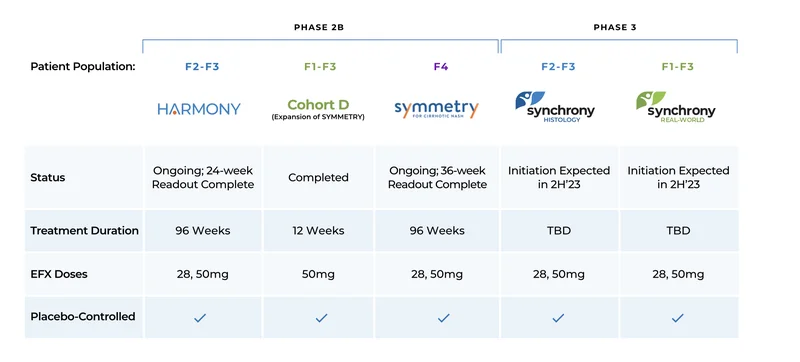
For years, the best we could offer was advice: "lose weight, eat better." Important, yes, but often too little, too late for those whose livers have already begun to form scar tissue, or cirrhosis. This is where efruxifermin changes the entire conversation. It’s designed not just to put out the fire, but to help rebuild the scorched earth left behind. It’s a therapeutic that has shown the potential to actually reverse fibrosis—the scarring that leads to cirrhosis. This is the holy grail. It’s the biological equivalent of turning back the clock on years of damage.
Think of it like this: If your car’s engine is constantly overheating because of a design flaw, you can keep pouring coolant into it forever (managing the symptom), or you can re-engineer the faulty part (fixing the root cause). For decades, medicine has been pouring coolant. This acquisition is Novo Nordisk betting billions that they can now re-engineer the engine. So, when you see a drug targeting the fundamental mechanisms of tissue repair, what other "irreversible" conditions suddenly seem a little less permanent?
A $5.2 Billion Declaration of Intent
Let's be clear: $5.2 billion is not a casual investment. It’s a profound statement of belief. Novo Nordisk, a Danish titan built on managing diabetes, is planting its flag deep in the heart of a new territory: regenerative medicine. The market’s initial reaction was predictably myopic—Akero’s stock soared, while Novo’s dipped a measly 1.25%. Wall Street, in its infinite quarterly wisdom, saw a massive expenditure and got nervous. But they're missing the forest for the trees.
This move is like IBM in the 1970s acquiring a small, obscure startup working on something called a "graphical user interface." It’s a signal that the incumbents see where the world is heading, and they are willing to pay any price to be a part of that future. The fact that part of the payment—$6 per share—is contingent on full FDA approval for efruxifermin shows a calculated confidence, a bet not just on the science but on the inevitable need for this kind of solution—it’s a move that feels less like a gamble and more like a carefully placed investment in the future of human health itself.
Of course, this power brings with it an immense responsibility. As we develop tools that can literally reverse the course of devastating diseases, we have to ask ourselves some hard questions. How do we ensure these breakthroughs don't just become luxuries for the wealthy? What systems must we build to guarantee that the person in rural America has the same access to a "cure" as the executive in Copenhagen? The technology is leaping forward, and our ethical frameworks must race to keep up. But what a wonderful problem to have. The challenge is no longer if we can do it, but how we do it for everyone.
The Blueprint is Being Drawn
Forget the stock tickers for a moment. This acquisition is more than a financial transaction. It's a blueprint. It's a tangible piece of evidence that we are at the dawn of a new medical age, one where we shift our focus from maintenance to restoration. Today it's a fatty liver; tomorrow, could it be scarred lung tissue, or damaged kidneys, or even neurological pathways? The underlying principle—targeting the body's own regenerative capabilities to undo damage—is a platform for a revolution. This is just the first, incredibly expensive, and profoundly hopeful chapter.