
For years, a single flagpole stood empty outside the presidential palace in Dili, the capital of Timor-Leste. It was a quiet, powerful symbol of a dream deferred—a place held for a future that was promised but never quite seemed to arrive. I can almost picture it, the bare pole against the tropical sky, a silent testament to a 14-year wait to join the community of its neighbors.
This week, that changed. The blue, red, and yellow ensign of ASEAN is finally flying from that pole. After a long and arduous journey, Asia’s youngest nation has officially become the 11th member of the bloc. Timor-Leste steps onto the regional stage as it joins Asean after long-awaited accession
Most of the world saw this as a political story, a diplomatic victory decades in the making for President José Ramos-Horta. And it is. But if you think that’s the real headline, you’re missing the revolution that’s happening just beneath the surface. This isn’t just about joining a club. It’s about a nation making a breathtakingly bold decision to skip the 20th century entirely and build its future on a foundation of pure data.
The Digital Nervous System
Just days after their official accession to ASEAN, Timor-Leste didn’t just celebrate. They got to work. They signed a Memorandum of Understanding with Telin, the international arm of Indonesia’s telecom giant. Cabos de Timor-Leste and Telin to collaborate on telecoms projects Then another with the Malaysian government. These aren’t dusty trade agreements; they are the blueprints for the nation’s very soul.
They’re focused on building a bilateral submarine cable system. Now, that sounds technical and boring, but let’s break it down. Think of it this way: if a country is a living body, then roads and ports are its skeleton. But submarine fiber-optic cables? That’s the central nervous system. It’s the network of light-speed synapses that allows the brain—the people, the government, the economy—to think, learn, and connect with the world instantly.
Timor-Leste isn’t just getting one of these connections. The country’s first international subsea system, the TLSSC, is already in place. But by 2027, they’re set to land two more massive transpacific cables. When I first saw this flurry of activity, I honestly just sat back in my chair, speechless. This isn't incremental progress. This is a quantum leap. They are building a redundant, resilient, high-capacity digital foundation before they’ve even finished paving all their roads.
This is the kind of breakthrough that reminds me why I got into this field in the first place. We're witnessing a country architect its future around connectivity. What does it mean for a society when its first, most robust piece of infrastructure isn't a highway or a power grid, but a firehose of data connecting it to the rest of humanity? How does that fundamentally alter the trajectory of its development?
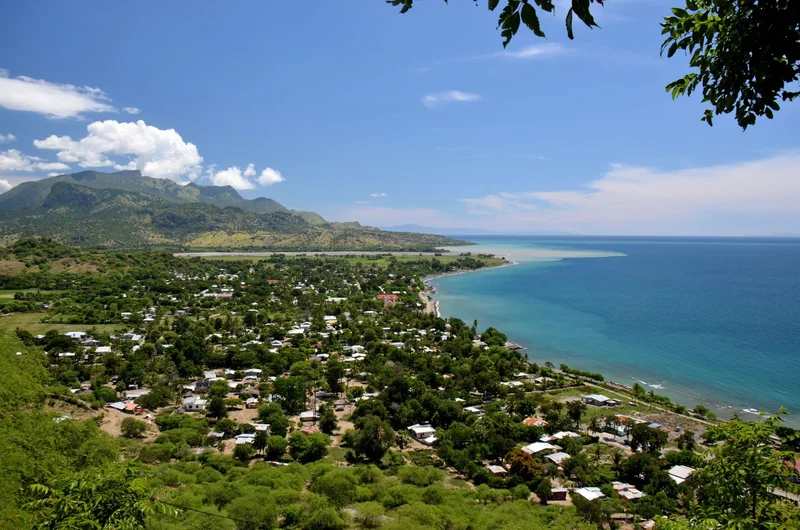
Leapfrogging a Century of Legacy
For years, the knock against Timor-Leste’s ASEAN bid was a diplomatic way of saying the country was too poor, too underdeveloped. A 2011 bid faltered because nations like Singapore argued it simply didn’t have the state capacity, the money, or the personnel. And they weren't wrong, by old metrics. The country’s infrastructure was decimated during its fight for independence.
But what if that supposed weakness is actually its greatest strength?
Think about it. Older, developed nations are prisoners of their own success. We are shackled to legacy systems—aging copper phone lines, clunky analog bureaucracies, and industries built for a world that no longer exists. To innovate, we have to rip and replace, a colossally expensive and slow process.
Timor-Leste has none of that baggage. It has a blank slate. It doesn’t need to transition from dial-up to broadband; it can go straight to fiber. It doesn’t have to digitize mountains of paper records; it can build an e-government from scratch. This is the ultimate leapfrog—the speed of this is just staggering, it means the gap between an agrarian past and a digital future is closing faster than we can even comprehend, potentially allowing them to build a society that is more agile, more efficient, and more connected than many of the nations that once looked down on them.
This isn’t unlike the way the United States built the transcontinental railroad in the 19th century, blasting through mountains to connect two coasts and forge a unified economic powerhouse. But this new railroad isn’t made of steel; it’s woven from strands of glass carrying light. And it doesn’t just connect a nation to itself; it plugs 1.3 million people directly into the global consciousness.
Of course, with this immense potential comes an equally immense responsibility. Building the infrastructure is one thing; ensuring that its benefits—access, opportunity, and education—reach every single citizen, from the streets of Dili to the most remote mountain village, is the real challenge. This digital future must be an inclusive one, or it will fail.
A Nation Born of Light
Look, what we're seeing here is more than just a feel-good story about the little guy finally getting a seat at the table. We are witnessing a paradigm shift in what it means to build a nation in the 21st century. Timor-Leste is running an experiment in real-time, testing the hypothesis that a country can build its prosperity not on smokestacks and factories, but on servers and data streams.
They are betting their entire future on the idea that in our modern world, connectivity is the most valuable resource of all. It’s the precursor to everything else: education, healthcare, economic opportunity, and democratic participation. By securing their digital sovereignty first, they are laying the groundwork for a future we can only begin to imagine. Forget the empty flagpole. The real symbol of Timor-Leste's future is the invisible light flashing beneath the waves, carrying the dreams of a nation.