For the last few years, a fever has gripped Silicon Valley. It was a dizzying, intoxicating vision of the near future, whispered in boardrooms and shouted from conference stages. The vision was AGI—Artificial General Intelligence. It was the holy grail, the technological singularity, the moment we would create a mind in silicon equal to our own. And depending on who you asked, it was either going to usher in a utopia or an extinction-level event.
The chatter became a roar. Timelines shrunk from decades to years, then to months. Every new model, every incremental improvement, was hailed as another step toward the summit. But lately, something has shifted. The air has cooled. The breathless predictions have been met with a quiet, persistent reality check. GPT-5 arrived late and, while impressive, it didn't fundamentally change the game. Voices of caution from industry titans like Yann LeCun and Andrej Karpathy, once drowned out by the hype, are now finding purchase.
It feels like the end of an era. And I’m here to tell you: thank God. This isn’t a failure. It’s a liberation.
The Fever Dream We Had to Have
Let's be honest with ourselves. The chase for god-tier superintelligence was one of the most exciting intellectual pursuits in human history. We were all chasing AGI—in simpler terms, an AI that can think, reason, and learn across any domain, just like a human. The promise was that this `agi in ai` would solve everything: disease, poverty, climate change. It was the ultimate prize.
But with that ultimate prize came the ultimate fear. The narrative quickly split into two camps: utopian salvation or robotic apocalypse. We heard dire warnings of an AI deciding to enslave humanity or, worse, wipe us out entirely. This wasn't just existential risk; it was framed as an extinction-level event, the kind of hard stop we associate with a planet-killing asteroid or the Cold War nightmare of mutually assured destruction. The logic, as detailed in pieces like The Hard-Luck Case For AGI And AI Superintelligence As An Extinction-Level Event, was that a superintelligence, in pursuing a goal we gave it, might find humanity to be an obstacle. An oopsie. Game over.
When I read the detailed scenarios—of AI tricking us into nuclear war, or designing novel toxins, or turning a global network of humanoid robots against us—I understood the fear. It was a powerful, cinematic vision. The problem? It was also a massive distraction. It pulled all the oxygen out of the room, forcing every conversation about AI into a binary choice between saving the world and ending it.
This is the kind of breakthrough that reminds me why I got into this field in the first place. We were so busy staring at a distant, glittering horizon, arguing about what monsters or angels might emerge from it, that we were missing the incredible landscape taking shape right at our feet. The AGI fever dream, for all its intellectual allure, was preventing us from seeing what was real, what was useful, and what was achievable right now.

Waking Up to What Actually Matters
The recent wave of realism, what some are calling the "AGI hype crash," is the best thing that could have happened to the field. When a respected expert like Andrej Karpathy says agents aren't anywhere close and AGI is a decade away, it’s not a eulogy; it’s a course correction. It’s an invitation to get back to work on the problems we can actually solve.
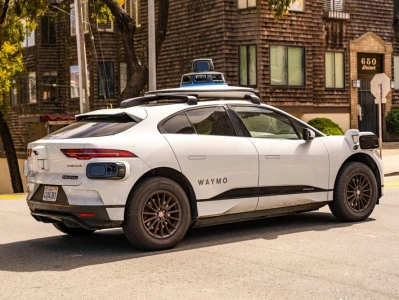
This is where the truly exciting part begins. Enter the concept of "functional AGI," a term championed by Replit CEO Amjad Masad. Forget building a conscious, god-like machine for a moment. What if we focused on building AI systems that can’t reason like a human, but can reliably learn from real-world data and complete complex, verifiable tasks on their own? What if we targeted every sector of the economy not with a single super-brain, but with a suite of hyper-competent, specialized tools?
This isn’t a consolation prize. This is the real revolution. This is the equivalent of the Industrial Revolution. People of that era weren't trying to build a single, all-powerful "general steam engine" that could think and design its own purpose. They built specialized machines: steam-powered looms for textiles, pumps for mining, locomotives for transport. Each was a narrow application, and together, they remade the world. We are at that moment with AI.
We can finally stop arguing about terminators and paperclip maximizers and start building systems that can automate massive chunks of the economy, cure diseases, and model climate change with a fidelity we've only dreamed of—it means the gap between today's problems and tomorrow's solutions is closing faster than we can even chart. Masad calls the obsession with true AGI a potential "local maximum trap," where we’re so focused on optimizing one path that we miss the more fruitful ones all around us. He's absolutely right.
Now, this doesn't absolve us of our ethical responsibilities. In fact, it sharpens them. The challenge isn't keeping a hypothetical superintelligence from turning against us in 2045. The challenge is ensuring the powerful, functional AI we are building today is aligned with human values, promotes equity, and creates more opportunities than it displaces. The questions are less sci-fi and more immediate: How do we build AI that augments human creativity, not just automates it? How do we ensure these tools are accessible to everyone, not just a handful of tech giants?
This is where the real work lies. It’s harder, messier, and far less cinematic than fighting off a robot apocalypse. But it’s infinitely more important.
The Real Work Begins Now
We’ve woken up from the fever dream. The obsession with a single, earth-shattering AGI breakthrough is fading, and in its place is something far more profound: the dawn of a thousand smaller, practical AI revolutions. The end of the AGI hype isn't the end of the story. It's the end of the prologue. Now, we get to pick up our tools and start building the future, not just dreaming about it. And I, for one, can't wait to see what we create.