
The Silent Scrub: Decoding the Data Behind the SpainSat Delay
Another night at Cape Canaveral, another scrub. On the surface, the news that SpaceX pushed its SpainSat NG-II mission from Tuesday to Thursday is just a minor blip on the relentless rocket launch schedule. A 24-hour delay in the spaceflight industry is the equivalent of a delayed subway train—an inconvenient but utterly routine occurrence.
But I’ve learned that in this business, the most interesting data isn't always in the grand spectacle of a spacex rocket launch; it’s often buried in the quiet, mundane details of the ones that don't happen. When you strip away the operational noise, the pattern of data surrounding this particular postponement is anything but routine. The official statement from SpaceX is, as is standard, a vacuum. No specific reason was given. And it’s in that vacuum that the real analysis begins.
We have four key variables in play: the weather, the payload, the booster, and the silence. When you plot them together, the resulting chart doesn't point to a simple hiccup. It points to a calculated, high-stakes decision that speaks volumes about how SpaceX manages risk when the cargo is someone else’s billion-dollar asset.
Deconstructing the Variables
Let’s start by eliminating the most common suspect. The weather. The 45th Weather Squadron, the entity responsible for the go/no-go forecast for any cape canaveral launch, projected a 95% probability of favorable conditions. That’s about as close to a perfect night in Florida as you can get. The image of the Falcon 9 standing on Launch Complex 40 under clear skies, bathed in floodlights with no work being done, is a powerful one. It tells us, with high confidence, that the problem wasn't in the sky. It was on the ground, inside the machine.
So we move to the next variable: the payload. This isn't another batch of Starlink satellites, where the loss of a few dozen in a fleet of thousands represents an acceptable, amortized risk. This is the SpainSat NG-II, a pair of highly specialized satellites designed for secure, encrypted communications for the Spanish government and its allies (a partnership between Hisdesat, Airbus, and the European Space Agency). These are 15-year assets, critical infrastructure placed in orbit. The financial and geopolitical cost of failure is astronomical. When the payload is this sensitive, the tolerance for any anomaly—any data point that deviates from the norm, no matter how small—drops to near zero.
This brings us to the most interesting piece of hardware in the equation: the Falcon 9 first stage. This particular booster, tail number B1067, is a veteran. This mission was slated to be its 22nd and final flight. More telling, it’s an expendable mission. The booster will not be attempting a landing, instead burning all its fuel to deliver the payload to a precise, high-energy orbit. I've looked at hundreds of these mission profiles, and this is the part of the data that I find genuinely puzzling. The decision to expend a booster with this much flight history is a significant choice. Was this planned from the outset due to payload mass and orbital requirements, or was it a late-stage decision related to the booster's lifecycle?
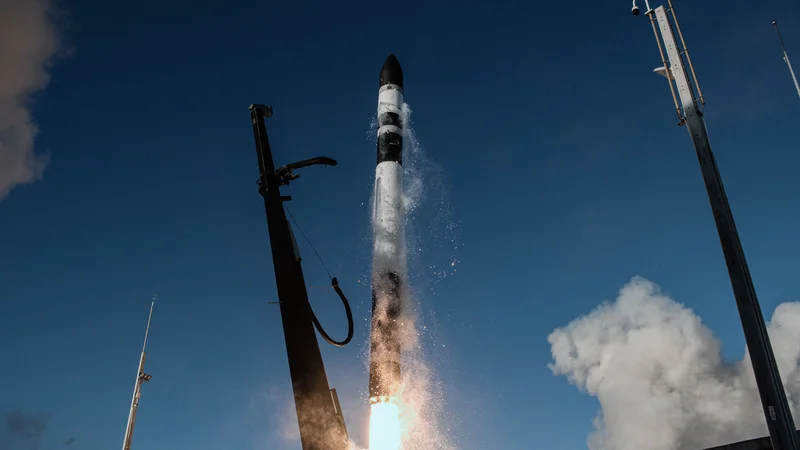
The correlation between a booster's final flight and an expendable trajectory is a data point worth watching. Does SpaceX see a statistical cliff where recovery becomes a less certain proposition after a certain number of flights? We simply don't have enough public data to know. But sending a 21-flight veteran on a one-way trip with a critical European military satellite feels like a deliberate, risk-mitigated choice.
The Signal in the Noise
This is where the final variable comes into play: the silence. SpaceX’s refusal to provide a specific reason for a scrub is standard procedure. But in this context, that procedure becomes a signal in itself. We know it wasn't weather. We know the payload is high-value. We know the booster is on its last legs. The logical conclusion is that a sensor returned an "out of family" reading, or a component failed a pre-flight check.
The decision to delay a space launch today is a simple exercise in risk calculus. The cost of a 24-hour delay—or to be more exact, a 48-hour delay now—is a known quantity. It involves propellant cycling, personnel hours, and range coordination. It’s expensive, but it's a fixed, manageable number. The potential cost of a launch failure is an entirely different order of magnitude. The decision to scrub means that an engineer, somewhere in Hawthorne or at the Cape, saw a number on a screen that crossed a predefined red line. The risk, however small, became unacceptable.
This entire episode is like watching a world-class surgeon prep for a complex, 12-hour operation. If, moments before the first incision, a single EKG reading looks slightly off, they stop. They don't tell the waiting family "the patient's third left ventricle pressure sensor is reporting a 2% deviation from baseline." They simply say, "We're postponing to ensure everything is perfect." The lack of detail isn't evasion; it's a sign of a system focused on the outcome, not the play-by-play.
What does this mean for the spacex launch today? It means the system is working exactly as designed. For a company often criticized for its aggressive "move fast and break things" ethos, this silent, conservative decision is the most powerful counter-argument. When the stakes are this high, the data shows that SpaceX doesn't break things. It waits. The question now becomes, what was the data point that triggered the hold? And will we ever know what it was?
The Most Valuable Anomaly is a Prevented One
Ultimately, the scrub of the SpainSat NG-II mission isn't a story of failure. It's a story of a mature system's immune response. The undisclosed technical issue is the pathogen, and the 48-hour delay is the fever that burns it out. The lack of a public-facing narrative is irrelevant to the cold, hard numbers of risk management. For Hisdesat and the ESA, the most valuable data point from this week won't be the telemetry from a successful launch; it will be the silent, invisible data point from a scrub that ensured their multi-million-dollar asset didn't become a multi-million-dollar firework. The real spectacle wasn't a rocket climbing into the sky, but the quiet, disciplined decision to keep it firmly on the ground.