
# $5 Trillion and Counting: Is Nvidia's Valuation a Mathematical Marvel or a Market Delusion?
The number is almost abstract: $5 trillion. It’s a figure more commonly associated with the GDP of a major nation than the market capitalization of a single company. Yet, here we are. Last week, Nvidia Corp. crossed that threshold, a milestone that feels less like a corporate achievement and more like a seismic event in market history. The stock, closing at $202.49 on Halloween, has become the singular engine of the market’s post-2023 rally, the sun around which all other tech planets now seem to orbit.
The public discourse, as seen in articles like Nvidia is worth $5 trillion. Here’s what it means for the market, has predictably bifurcated into two camps. On one side, you have the evangelists, pointing to a future remade by artificial intelligence, with Nvidia providing the essential tools for that reconstruction. On the other, the skeptics, who see the ghost of every past bubble flickering in the company’s stock chart. Federal Reserve Chair Jerome Powell has dismissed comparisons to the dot-com bust, and Nvidia’s own CEO, Jensen Huang, has downplayed the euphoria.
But sentiment isn’t driven by official statements. It’s driven by the raw, vertical trajectory of a stock chart and the fear of missing out. The question isn't whether AI is transformative—it clearly is. The question is whether Nvidia’s $5 trillion valuation is a rational, discounted cash flow calculation of that future, or if it’s something else entirely: a mathematical expression of pure market mania.
The Anatomy of a $5 Trillion Outlier
To understand the valuation, we have to first respect the fundamentals driving it. This is not a company built on vapor. Nvidia sits at the nexus of a tectonic shift in computing, and its numbers are, frankly, staggering. The company’s revenue is projected to hit $285 billion in its next fiscal year. To put that in perspective, in fiscal 2020, its revenue was just $11 billion. That’s more than a 25x jump—to be more exact, a 2,490% increase in just a handful of years.
This surge is fueled by a tidal wave of capital spending from the world’s largest corporations. Companies like Microsoft, Amazon, and Meta have publicly committed to a massive AI arms race, collectively projecting a 34% increase in capital expenditures to around $440 billion in the coming year. A substantial portion of that capital has one destination: Nvidia’s data center GPUs. The company has, for the moment, a functional monopoly on the one piece of hardware essential for building the future.
The result is a market concentration that is statistically breathtaking. As Matt Miskin at Manulife John Hancock Investments pointed out, Nvidia is a "massive outlier from a historical perspective." The company’s market cap is now larger than six of the S&P 500’s 11 sectors combined. (A concentration that makes historical comparisons to companies like Cisco during the dot-com era or even General Electric in its prime look modest.) The S&P 500 isn’t just putting a lot of eggs in one basket; it’s building the entire basket out of a single company’s stock.
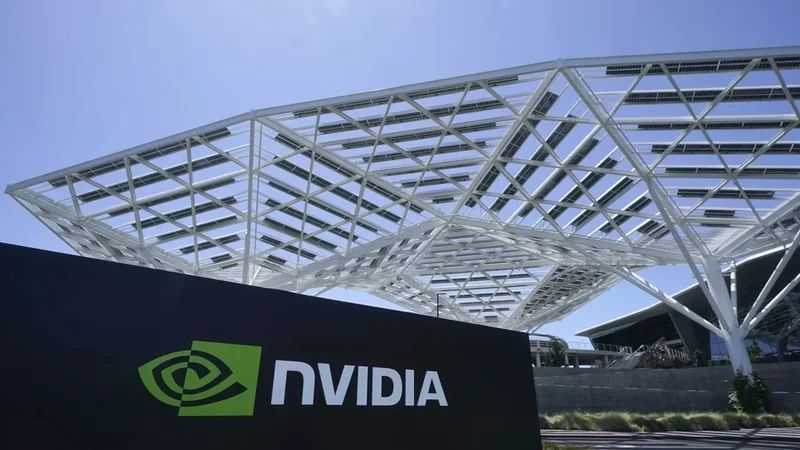
And this is the part of the report that I find genuinely puzzling. The bull case rests on extrapolating this growth curve into the future. It assumes that the current, frantic build-out phase of AI infrastructure will not only continue but accelerate, and that Nvidia will maintain its near-total market dominance indefinitely. But does that assumption account for the brutal physics of large numbers?
The Gravity of Large Numbers
Growth is easy when you’re small. It’s much harder when you’re a $5 trillion entity. Nvidia’s ascent has been like a rocket ship breaking through the atmosphere. But now it’s in orbit, and the challenge is no longer about initial thrust but about defying the immense gravitational pull of its own size. Every subsequent $100 billion in revenue growth is exponentially harder to achieve than the last. The market, however, seems to have priced the stock as if the laws of financial physics don’t apply.
This is where I believe the core discrepancy lies. The valuation is not pricing in a successful company; it’s pricing in a perfect one. It assumes no significant competitive response from AMD, Intel, or a well-funded startup. It assumes no geopolitical disruption to its supply chain. It assumes no cyclical downturn in enterprise spending. It assumes the current replacement and upgrade cycle for AI chips will be perpetual.
What happens when the initial, frantic land grab for AI compute capacity begins to normalize? Are we truly modeling a future where every company on the planet requires its own supercomputing cluster, and that Nvidia will be the exclusive, high-margin provider for all of them? The narrative has become so powerful that these fundamental questions seem to have been set aside.
The current market psychology feels less like the dot-com bubble, which was fueled by retail speculation on unprofitable "eyeball" metrics, and more like a highly sophisticated, institutional-led belief in a single point of failure. The capital is smarter, the companies are profitable, but the core behavior—channeling an ocean of money into a single, narrow theme—rhymes with the past. The danger isn't that Nvidia will collapse like a Pets.com. The danger is that it will merely perform like an excellent, but not miraculous, company, and its stock will have to correct to a reality that is anything less than perfection.
An Equation Priced for Perfection
Let’s be clear: Nvidia is a phenomenal company. It’s a case study in engineering prowess and strategic vision. Jensen Huang has executed a multi-decade plan that has culminated in one of the most dominant technological positions in modern history. None of that is in dispute.
The dispute is with the number. Five trillion dollars. A valuation of this magnitude is not a reflection of past success or even present dominance. It is a bet—a massive, leveraged bet—on a flawless future. It implies a world with no new competitive threats, no macroeconomic headwinds, and an endlessly steepening curve of customer demand. It is an equation with every variable solved for the most optimistic outcome possible.
My analysis suggests the market is no longer valuing Nvidia the company. It is valuing Nvidia the idea—the idea of a permanent technological monopoly at the dawn of a new age. And while ideas can be inspiring, they are not balance sheets. The question for anyone looking at that $202.49 stock price ahead of earnings is simple: are you investing in a business, or are you underwriting a belief in miracles? Because at $5 trillion, the price for the two has become indistinguishable.