
It’s easy to get lost in the noise. Wall Street has a tendency to do that—to stare so intently at the flickering numbers on the screen, the quarterly reports, the decimal points on an earnings-per-share estimate, that it completely misses the seismic shift happening right under its feet. For most of 2025, the narrative around Apple was one of stagnation. A tech giant that had lost its way, falling behind in AI, burdened by tariffs, its stock sputtering while others rocketed into the stratosphere.
Analysts drew their lines on the charts, set their price targets—some even below where the stock is currently trading—and declared the magic was gone. They saw a 5% gain for the year and called it a story of failure. But what if they’re looking through the wrong end of the telescope? What if the real story isn’t about a stock’s performance over the last ten months, but about the potential energy building up in 315 million people around the world? I believe we’re on the cusp of something extraordinary, and the market is only just beginning to wake up to it.
The Great Uncoiling
Let’s talk about that number for a second: 315 million. That’s how many iPhone users, according to Wedbush Securities, are holding onto a device that’s four years old or more. For years, the tech world has whispered about the next "supercycle," a term for a massive wave of upgrades. But that word is too sterile, too clinical. It’s an analyst’s term. What it fails to capture is the human element, the quiet patience of a global community waiting for a reason to leap forward.
This isn't just about a slightly better camera or a faster chip. This is about a collective, pent-up desire for a meaningful evolution in the tool we use to navigate our lives. Think of it less like a line of customers and more like a massive spring, coiled tighter and tighter with each passing year, storing unbelievable potential energy. The data from Apple’s own iPhone 17 launch event tells this story far better than any stock chart. Global unique visitors to the website were up 12% from last year. When pre-orders opened, traffic jumped nearly 16%. When I saw those numbers, I honestly just smiled. It was the digital footprint of anticipation, a global community leaning in, whispering, "Is this the one?"
Are these concrete sales figures? No. But they are a powerful signal of human intent. It's the hum before the earthquake. This massive group of people wasn't just being frugal; they were waiting for a signal that the next step was worth taking. And with the iPhone 17, it appears Apple has finally given it to them. The early sales data—up 14% in the US and China, with the base model’s sales doubling in China—isn't the peak of the story. It's the first tremor.
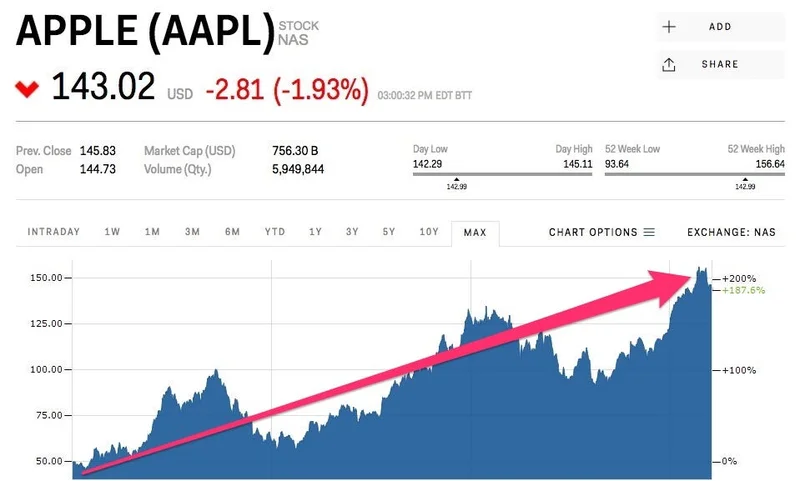
So, what does this mean for the future? It means that the models predicting Apple will ship 236 million units next year might be laughably conservative. Apple itself seems to think so, reportedly upping its initial 2026 production forecast by six million units. This is the spring beginning to uncoil.
Beyond the Balance Sheet
The disconnect between Wall Street's rearview-mirror analysis and the forward-looking reality is staggering. We saw it in the latest earnings call. The headlines screamed about a narrow miss on iPhone revenue and soft sales in China for the quarter. It’s the kind of data point that sends algorithms into a selling frenzy. But then you listen to Tim Cook. You hear the confidence in his voice as he talks about supply constraints because of high demand and his expectation for the December quarter to be the best in the company’s history. Apple beats on Q4 expectations, stock rises on strong outlook despite poor China sales.
You have to learn to separate the signal from the noise. The Q4 numbers were a snapshot of the last few weeks of a fiscal year, capturing just the very beginning of the iPhone 17's launch—in simpler terms, it’s like judging the success of a blockbuster movie by only looking at the ticket sales from the Thursday night preview. The real story is the one that’s just beginning to unfold. The demand, the production increases, the massive upgrade window, and the palpable excitement create this incredible positive feedback loop that could redefine Apple's growth trajectory for the next several years—it’s a dynamic interplay of human desire and manufacturing scale that I think few people truly appreciate.
This reminds me, in a way, of the dawn of the internet. Back then, analysts were trying to value dot-com companies using industrial-age metrics, completely missing the paradigm shift in communication and commerce that was happening. We're in a similar moment. People are trying to value Apple based on its past performance, when its true value lies in its potential to once again become the platform for the next wave of innovation.
Of course, with this scale comes immense responsibility. When a single company is the steward of the digital ecosystem for billions, every design choice, every privacy policy, carries enormous weight. This coming wave of technology must be built with more intention and care than ever before. But what an incredible opportunity it is. What will we build with these new tools? How will our relationship with technology evolve when our primary device takes another meaningful leap forward?
We're Measuring the Wrong Thing
In the end, this isn't a story about a stock price. It's a story about human potential. Wall Street is obsessed with a 12-month price target of $256, but that number is an artifact of an old way of thinking. It’s a calculation based on past multiples and linear growth projections. It completely fails to account for the exponential power of 315 million people deciding, all at once, that the future has arrived. The real question isn't whether Apple's market cap can hit $4.5 trillion. The real question is what we, as a society, will do when the most personal technology in our lives becomes dramatically more capable. That's the metric that truly matters, and it’s one you’ll never find on a balance sheet. Where Will Apple Stock Be in 1 Year?