Let’s be real for a second. The whole song and dance around quarterly earnings reports has become one of the dumbest rituals in modern capitalism. A bunch of analysts in stiff suits throw darts at a spreadsheet, come up with a "consensus estimate," and then we all hold our breath to see if a multi-hundred-billion-dollar company managed to hit a completely arbitrary number.
Leading up to Eli Lilly’s Q3 report on October 30th, the noise was deafening. Headlines screamed questions like, Should You Buy Eli Lilly Stock Before Oct. 30?. Wall Street was predicting a massive 40% jump in revenue, which sounds precise until you look closer. When it came to the actual profit—the earnings per share—their predictions were all over the map. One guy said $5.49, another said $7.21. That’s not analysis; that’s a Vegas betting line. It’s like a weather forecaster predicting a sunny day with a 100% chance of a category five hurricane. Thanks for the insight, fellas.
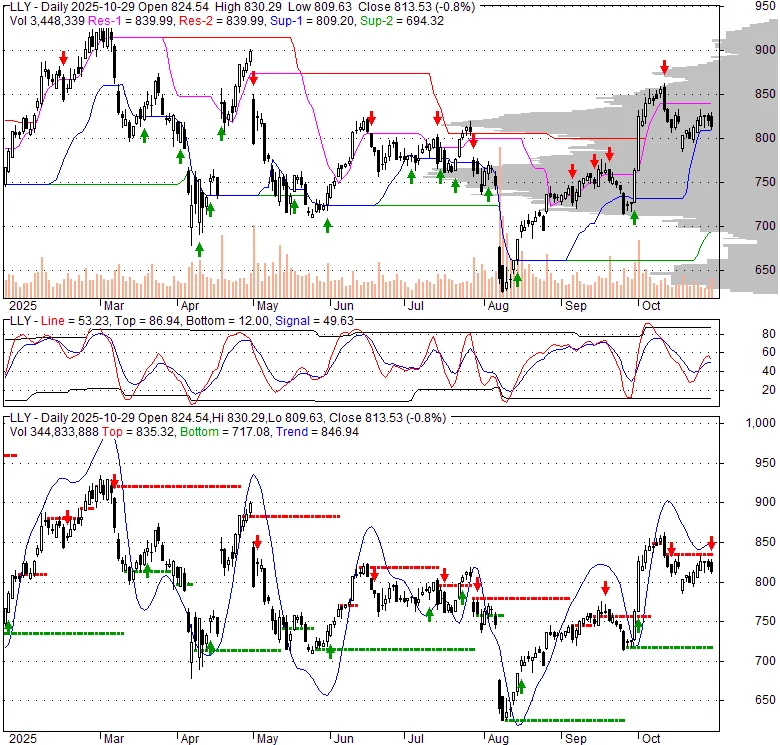
And the history here is a joke. The stock’s reaction to past earnings has been completely unhinged. They beat estimates in Q4 2024, and the stock basically shrugged. They missed estimates in Q1 2025, and the stock went up. It’s a clown show. So the question wasn’t really about Lilly’s performance. The real question was: how would the market’s bipolar, caffeine-addicted hive mind react this time?
The Rocket Ship That Everyone Pretended to See Coming
So, October 30th rolls around, and what happens? Eli Lilly didn't just beat the estimates. They strapped the estimates to a rocket and launched them into the sun. The news broke quickly: Eli Lilly blows past estimates, hikes guidance as Zepbound and Mounjaro sales soar. The stock, offcourse, made some "big moves."
And why? Two words: Mounjaro and Zepbound. These aren't just drugs anymore; they're cultural artifacts. They're the magic wands that are reshaping not just waistlines, but our entire society's relationship with food, health, and body image. Eli Lilly isn't just selling a pharmaceutical product. They're selling a solution to a deeply ingrained cultural anxiety, and they’re making an obscene amount of money doing it. The company’s revenue is now basicly a direct measurement of society’s desperation for a quick fix.
This is a bad sign. No, "bad" doesn't cover it—this is a five-alarm dumpster fire of societal priorities. We're cheering on a company whose record-breaking profits are fueled by a public health crisis. It feels... gross. Then again, maybe I'm the crazy one here. Maybe this is just the peak of American innovation and I'm too cynical to see it. But when a company's stock price becomes a proxy for a nation's obesity rates, something just feels deeply broken.
The whole spectacle is almost impossible to follow if you're a normal person, anyway. Trying to dig into the source material for these reports is a nightmare. Before you can get to a single number, you're hit with a 3,000-word pop-up about "Strictly Necessary Cookies" and "Third-party Ad Selection." Give me a break. It's like they're actively trying to bury the information under a mountain of legal jargon nobody on Earth has ever actually read.
So What Was the Point of All That Worry?
Here’s the thing that drives me nuts. After the blowout numbers, every financial pundit on TV gets that smug look on their face, clears their throat, and starts explaining why this outcome was so obvious. They’ll point to prescription trends and market penetration and all sorts of other post-hoc rationalizations.
It's all nonsense.
If it were so obvious, why was the official EPS estimate range a mile wide? If they all knew this was coming, why did the stock barely move after a previous earnings beat? The truth is, they didn't know. They were guessing. We were all just watching the ball spin on the roulette wheel, and this time it landed on black. The entire "buy before earnings" debate was a complete waste of breath.
The market isn't a logical machine. It's a temperamental beast that runs on a cocktail of greed, fear, and algorithmic trading you and I will never understand. Trying to time your entry into a stock like Lilly based on a single quarterly report is a fool's errand. You're not investing; you're gambling that you can outsmart a million other gamblers who have more money and faster computers. And if you think you have an edge in that game...
This ain't about smarts. It's about momentum. Right now, Lilly is riding a tidal wave of demand for drugs that promise to change lives. How long will that last? What are the long-term health consequences? What happens when competitors flood the market? These are the real questions, but they don't fit neatly into a quarterly earnings report, so nobody bothers to ask them. They’re too busy staring at the stock ticker.
The House Always Wins, Folks
Look, the lesson here isn't that Eli Lilly is a great company or that you should have bought the stock on October 29th. The lesson is that the entire system is a casino disguised as a science. The analysts are the guys selling you "unbeatable" systems at the door, the financial news networks are the flashing lights and loud noises designed to keep you at the table, and the company executives are the pit bosses who know the odds are always in their favor. Whether you won or lost this one hand doesn't matter. In the long run, the house always wins. And you're not the house.